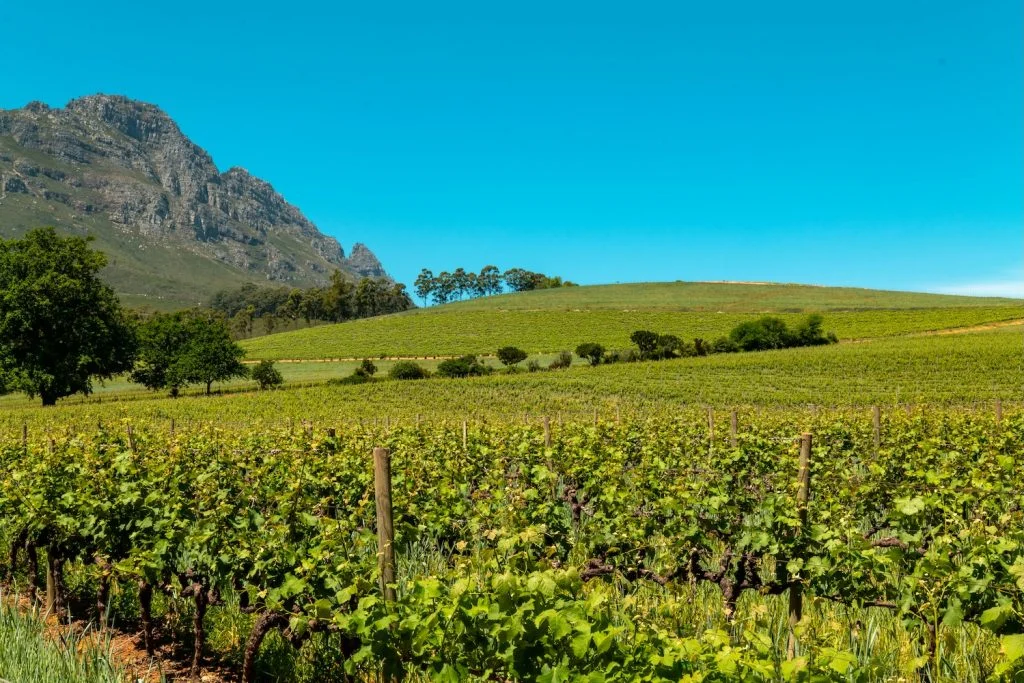
You may think France and Italy have the market on fine wine, but South Africa gives both regions a serious run for their money. From the sun-drenched slopes of Stellenbosch and the storied valleys of Franschhoek to the cool maritime cliffs of Walker Bay, these are the South African estates worth visiting, and the wines worth adding to your cellar.
The Vineyard: Anthonij Rupert Wines
The Provenance: Franschhoek Valley, Western Cape
Notable Wines: Cabernet Franc; Cape of Good Hope range; L’Ormarins Méthode Cap Classique
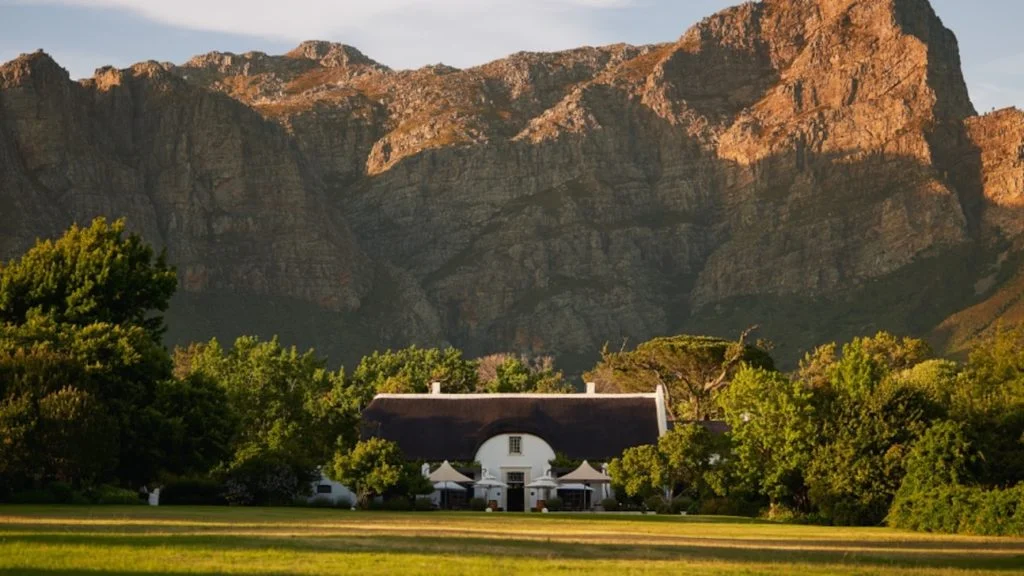
Start in Franschhoek, with Anthonij Rupert Wines. Founded on the historic L’Ormarins farm and acquired by Johann Rupert in 2003, the estate now spans two historic farms, four specialized cellars, and a portfolio that pulls fruit from some of the Western Cape’s most sought-after sites.
The infrastructure here is among the most advanced in Africa. The cellar operates on a gravity-fed system, with an electronic flywheel directing fruit and juice into either stainless steel tanks or French oak barrels. Every decision is site-driven. Under the broader Rupert Wines umbrella, six distinct labels emerge, each reflecting a different terroir. Rupert himself frames wine as a lifestyle pursuit, not simply a business, and that philosophy shows in the consistency across the range.
The Tasting Experience
Plan ahead and stay awhile. Tastings unfold in a restored Cape Dutch manor house furnished in mid-19th-century style. The front veranda opens to sweeping valley views, while the rear terrace looks onto a formal rose garden backed by the Groot Drakenstein Mountains. For a deeper dive, book the Estate Package. It includes a scenic tram ride between stops, tastings at both Terra del Capo and the main Anthonij Rupert rooms, an antipasti lunch, and entry to the Franschhoek Motor Museum, home to roughly 80 vintage cars. You can also opt for Italian cheese pairings or a classic high tea. Reservations are strongly recommended, and the estate is fully cashless.
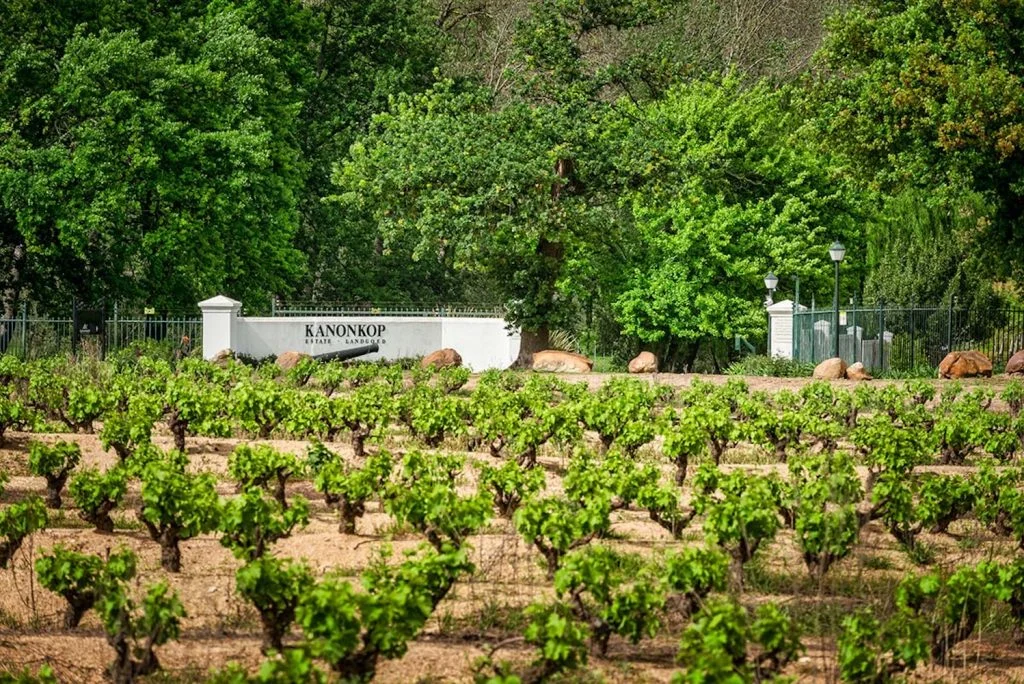
The Vineyard: Kanonkop Wine Estate
The Provenance: Simonsberg Mountain, Stellenbosch
Notable Wines: Paul Sauer; Estate Pinotage; Black Label Pinotage
From there, move to Stellenbosch. Kanonkop Wine Estate sits at the foothills of Simonsberg Mountain and has defined South African red wine for decades. This is a fourth-generation family estate, producing wine since the 1940s and bottling under its own label since 1973.
Kanonkop’s reputation extends well beyond South Africa. It consistently ranks among the world’s most admired wine brands and is often compared to a First Growth for its structure and longevity. The Paul Sauer Bordeaux-style blend delivers depth and aging potential, while the estate’s Pinotage—especially the Black Label—has become a reference point for the varietal.
The Tasting Experience
The atmosphere is relaxed. You’ll taste the full lineup in engraved Riedel stemware while hosts walk you through each wine’s background and vintage variation. The tasting room itself reflects the estate’s history, with family archives, art, and large-format bottles on display. For a more focused experience, private tastings are available, offering deeper insight into terroir and winemaking decisions. The on-site vinoteque is worth a stop for older vintages and limited releases.
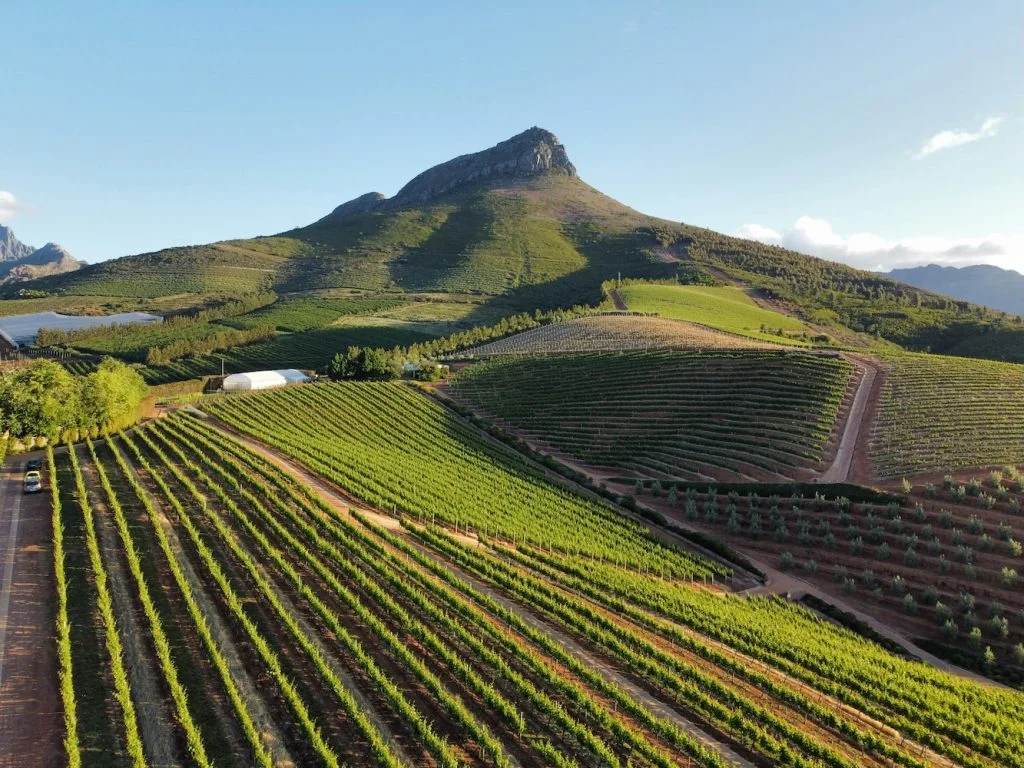
The Vineyard: Boekenhoutskloof
The Provenance: Franschhoek Valley (with Syrah vineyards in Swartland)
Notable Wines: Syrah; The Chocolate Block; Cabernet Sauvignon; Sémillon
For something more insider, secure a visit to Boekenhoutskloof. Established in 1776 in a remote corner of the Franschhoek Valley, the estate has evolved into one of South Africa’s most respected producers. Syrah leads the portfolio, particularly from Swartland vineyards, while The Chocolate Block remains one of the country’s most successful modern blends.
The estate is now marking three decades in its current form. Production has grown from just 6,000 bottles to more than 6 million annually across all labels. Even so, the flagship cellar remains intentionally small and tightly controlled. Critics often describe it as a “Rolls-Royce” operation. Under owner Marc Kent and chief winemaker Gottfried Mocke, the focus stays firmly on quality, with sustainability built into the model. The estate is also a founding member of the Franschhoek Mountain Conservancy.
The Tasting Experience
This is one of the Cape’s more exclusive bookings. Tastings are offered by appointment only, typically on Tuesdays and Thursdays. The format begins with a cellar tour, followed by a communal tasting in the blending room, where guests gather around a single table with mountain views—often led by the winemaker. There’s one notable twist: no wine is sold on-site. The experience is intentionally removed from retail. Book well in advance, ideally a month or more.
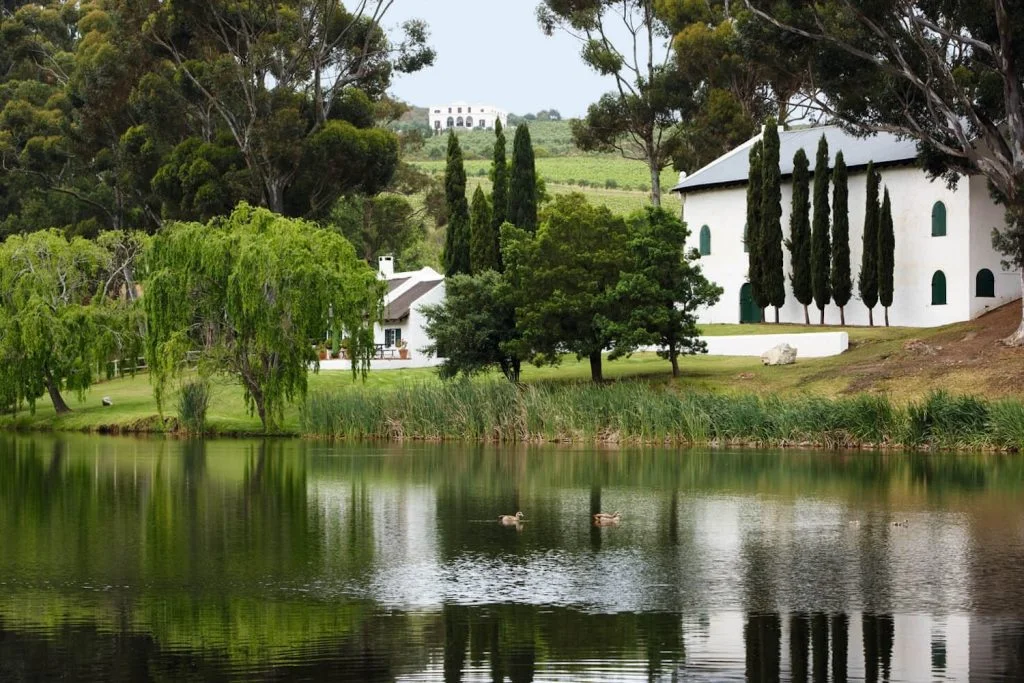
The Vineyard: Hamilton Russell Vineyards
The Provenance: Hemel-en-Aarde Valley, Walker Bay
Notable Wines: Pinot Noir; Chardonnay
Finish near the coast. Hamilton Russell Vineyards helped establish the Hemel-en-Aarde Valley as a premier cool-climate region. Tim Hamilton Russell planted vines here in 1976, well before the area gained traction, focusing on Pinot Noir and Chardonnay—both uncommon choices in South Africa at the time.
The estate remains one of the most southerly in Africa and among the closest to the ocean. That proximity shapes the wines, which are restrained, mineral-driven, and built for aging. Now under Anthony Hamilton Russell, the style remains consistent. The estate marked its 50th anniversary in 2025, reinforcing its status as a pioneer in the New World category.
The Tasting Experience
Tastings take place in a historic cottage near the cellars, overlooking a lake filled with birdlife. The focus is Pinot Noir and Chardonnay, with detailed insight into how site and climate influence each. Guests can also sample wines from the Ashbourne label. Before you leave, consider a purchase of the estate’s extra virgin olive oil or raw fynbos honey. Both reflect the same attention to detail found in the wines.
Other Articles You’ll Like
At Home Among The Best Winery Hotels in the World
In Wine, In Verite
On Our Radar: South African Cuisine and Wine
FAQs
Q: What makes South African wine unique?
A: South Africa combines Old World structure with New World energy. The country’s winelands—especially Stellenbosch, Franschhoek, and Hemel-en-Aarde Valley—offer diverse soils and strong coastal influence. The wines show freshness, balance, and clear terroir expression.
Q: What is Pinotage, and should I try it?
A: Yes—especially from top producers like Kanonkop Wine Estate. Pinotage is South Africa’s signature grape, a cross between Pinot Noir and Cinsault. It delivers dark fruit, spice, and structure, with real aging potential.
Q: When is the best time to visit South Africa’s wine regions?
A: Plan for late summer through early fall (February to April). That’s harvest season in Western Cape, when vineyards are at their most active. Spring (September to November) is another strong option, with mild weather and fewer crowds.
Uncredited photos courtesy of unsplash