Over the past two years, you have spoken with at least one friend, family member, new acquaintance, or random person on the street who told you they were planning a trip to Japan. Or that they had just come back from a trip to Japan. I am guilty for being one of these individuals. In my defense, my husband and I knew we wanted to honeymoon in Japan several years before the craze began (I’m not like other girls!).
When we went to Japan this past March for a month, it was my first time there, and in Asia in general. Thus, I wanted to do all of the typical, touristy spots (the carbonara ramen in Tokyo, the Red Gates in Kyoto, etc.) knowing full well I was already planning a trip to come back in the future and hit some of the lesser-known spots. I am a classic Type A eldest daughter: trip planning is my middle name.
Japan-Planning
For our almost four week long adventure, I planned a majority of it. The restaurants, the train rides, hotels, unique shopping experiences, head spas — you name it. My husband, however, had already been to Japan. While he was happy to play the tourist game with me, his one request was to plan a special surprise for my 30th birthday (which fell over our honeymoon trip). So, that how the five-day side quest somewhere different and unknown came about.
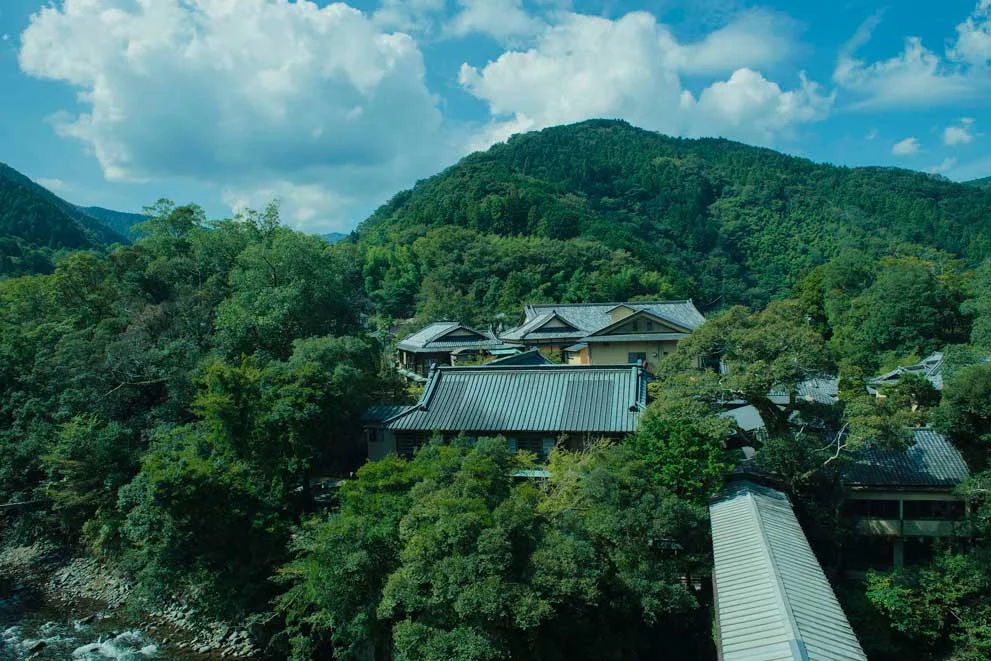
And that’s how I ended up on a train from Tokyo on the JR Odoriko Express (an hour-and-a-half train) to Shuzenji Station. When we arrived, a car picked us up for a twenty-minute ride, with views of Mt. Fuji on the way, and we drove into the mountains of the Izu Peninsula to a magical oasis called Ochiairo.
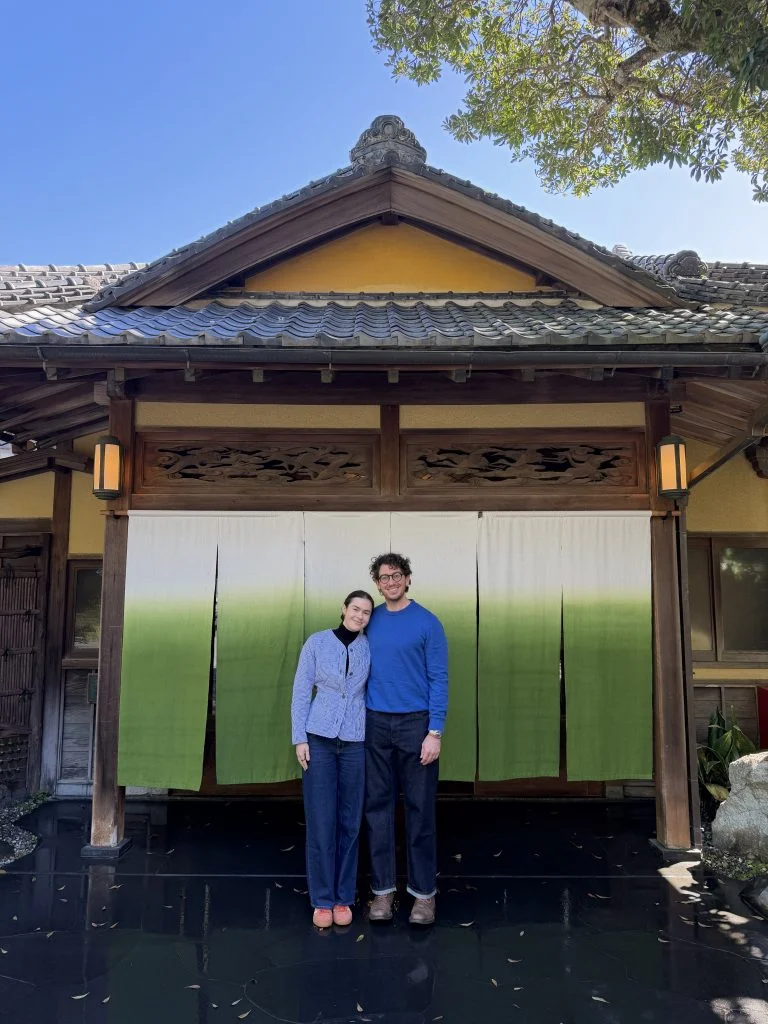
Never in my life has a hotel rendered me speechless. But here, I knew this was going to be a special experience from the second I stepped foot into the entryway of Ochiairo. This is where staff asked us to remove our shoes and handed us slippers instead.
A Little History of Ochiairo
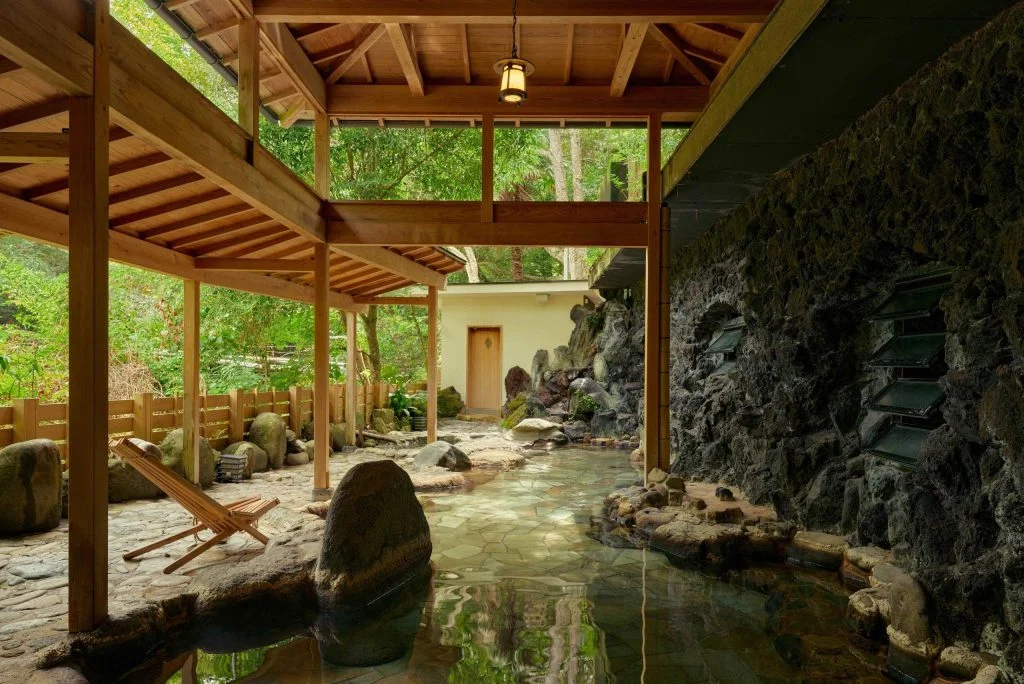
Ochiairo has been standing in that exact spot since 1874, built at the start of the Meiji period on the literal convergence of two rivers. For nearly 150 years, this property has quietly played host to some of Japan’s most celebrated writers and artists. Katai Tayama and Toson Shimazaki checked in during the Meiji era. Yasunari Kawabata (yes, that Kawabata, Japan’s first Nobel laureate in literature) and Motojiro Kajii came through in the Taisho period. And, Bokusui Wakayama and Hakushu Kitahara followed in the early Showa years. These weren’t just guests passing through. They used Ochiairo as a place to actually create, drawn by the same stillness that had me speechless at check-in.
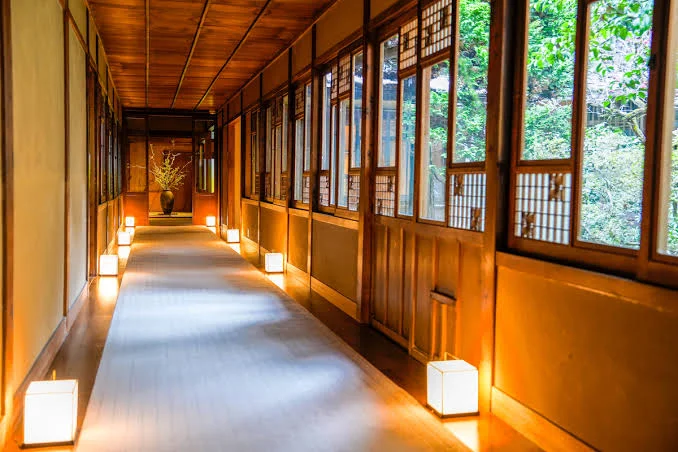
The main building now carries status as a Registered Tangible Cultural Property, and you can feel why the second you start paying attention. Black persimmon and rosewood run through the woodwork, and the Nemun-tei space follows the Sukiya-zukuri style, the same architectural tradition tied to Sen no Rikyu and classical tea ceremony houses. Every staircase, every corridor, every guest room carries this level of intention.
Leave Your Suitcase In Tokyo (Really, I Mean It)
That care extends to how they take care of you. This is the part of Ochiairo I still describe to friends, as though I’m trying to convince them of something slightly unbelievable. The truth is: you do not need to pack. At all. The moment you arrive, they hand you a full uniform for your stay: pajamas, a traditional robe, slippers for the room, and a separate set of sandals for wandering the grounds.
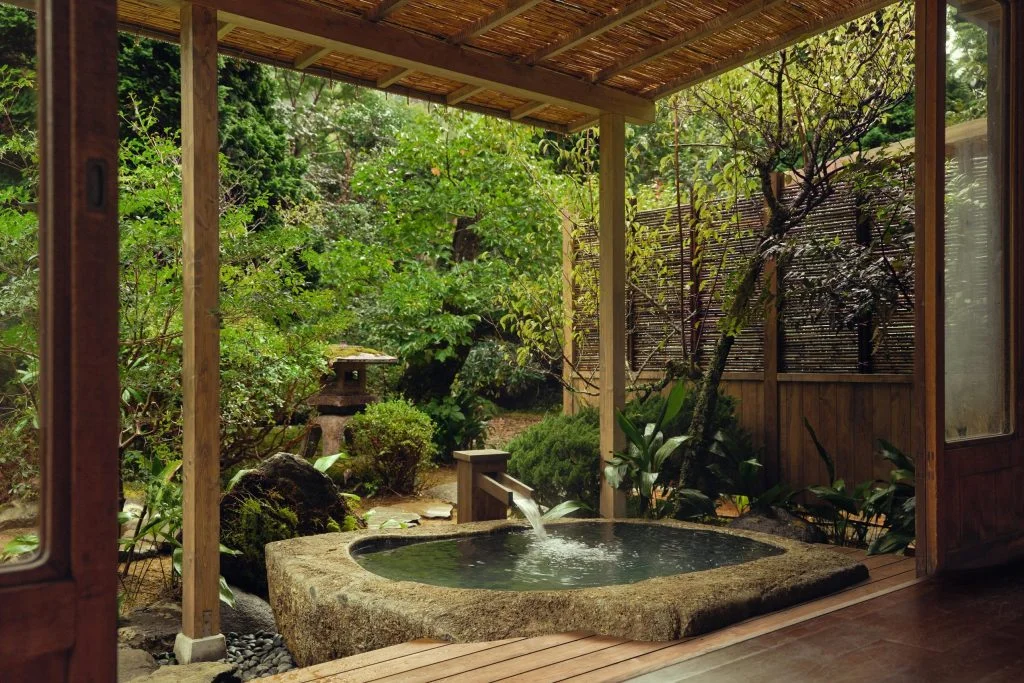
If you’re headed to one of the saunas, the pools, or the cold plunges scattered around the property, there’s yet another robe and a sauna hat waiting for that specific purpose. They’ve already thought through every detail on your behalf. Which, for a person who spent the better part of a year building spreadsheets for this trip, was its own kind of vacation.
The Room (And the Private Onsen)
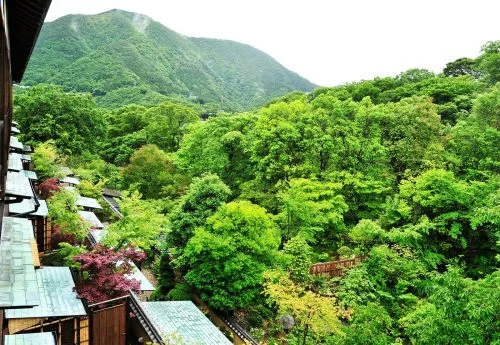
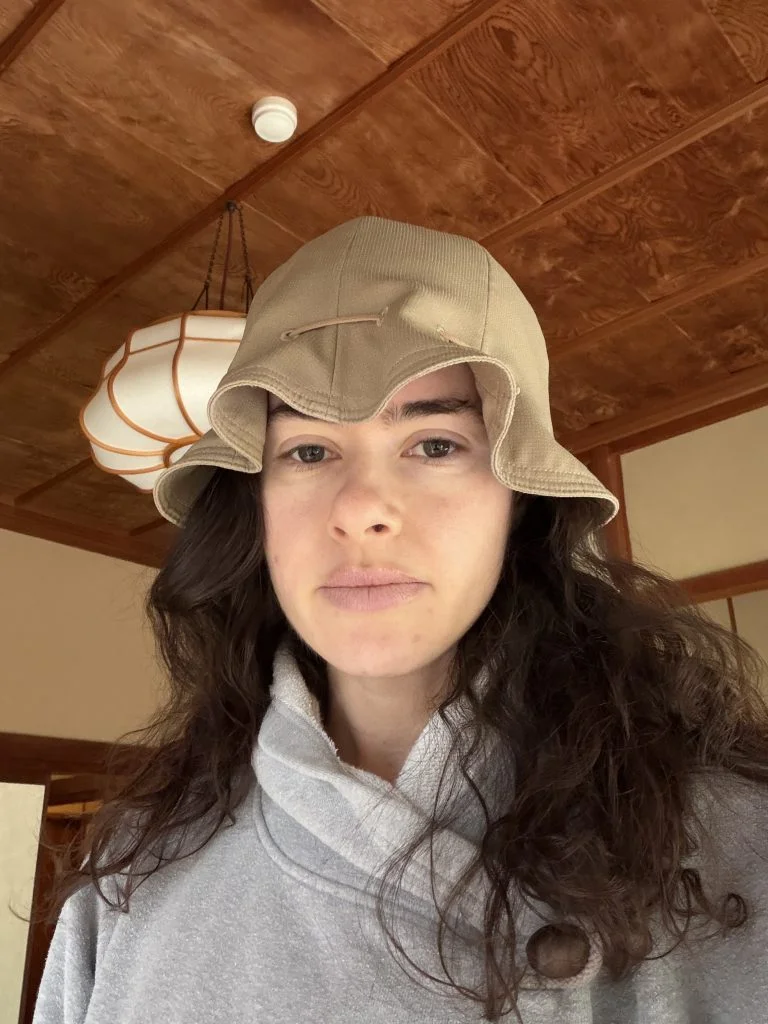
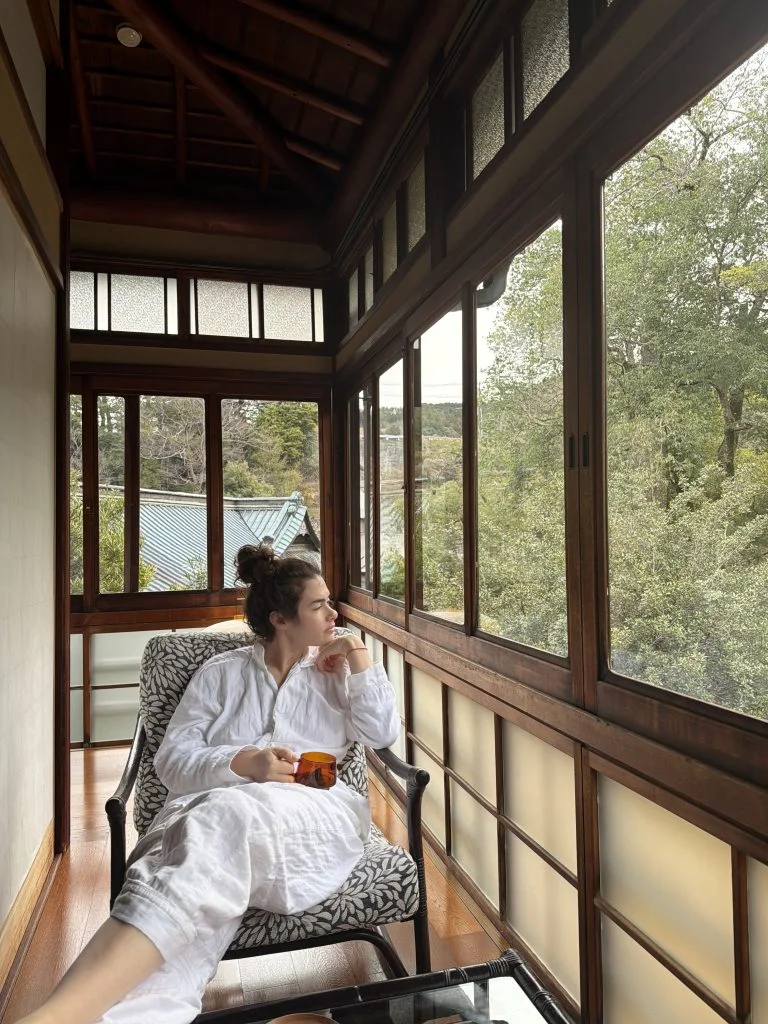
Our room made the case for staying inside all day, which is not something I say often as someone who books every excursion available. It was a traditional Japanese room top to bottom: tatami mat flooring, traditional Japanese beds made up fresh each night, and a sunroom off to the side with its own seating area. That seating area looked directly out onto the river and the mountains beyond it.
We’d chosen the room with a private onsen attached, a small soaking tub and shower tucked into our suite. So, some mornings we never even made it to the communal baths before we were pruny and completely at peace.
Come For The Spa, Stay For The Food
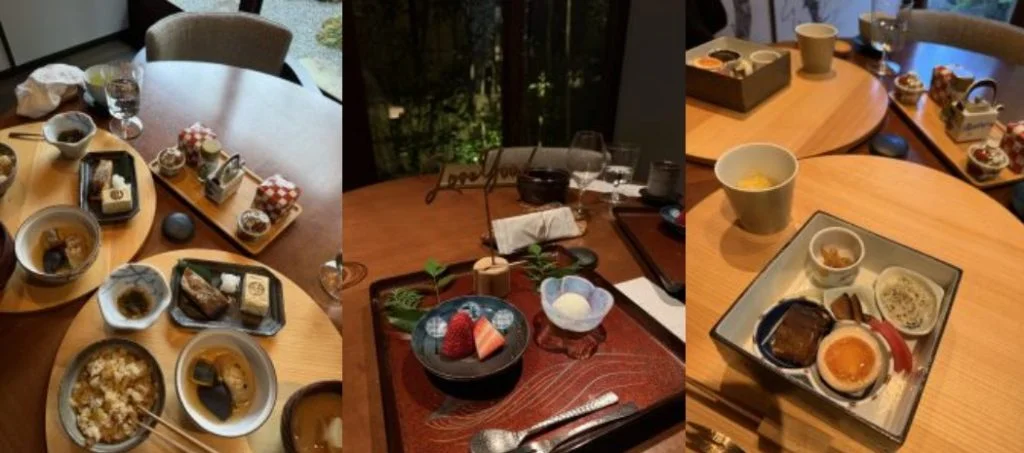
Three meals a day, every one of them was a multi-course traditional Japanese meal, built from ingredients sourced around the Izu Peninsula. Without exaggeration, it’s some of the best food I have eaten in my entire life.
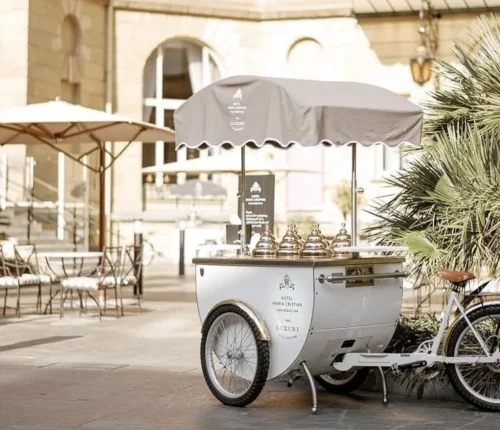
There was also a snack station available basically around the clock. It was stocked with Japanese sodas I’d never seen before, and ice cream made with Hokkaido milk (which, if you know, you know). It’s considered the best milk in the region (and I would argue, the world).
True Peace And Quiet
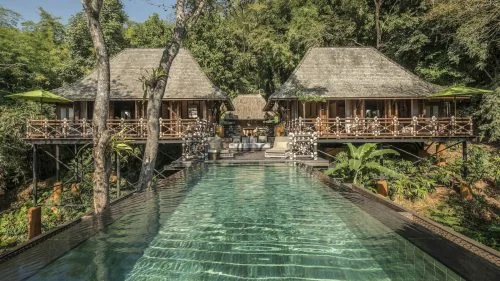
And somehow, despite all of this, we barely saw another guest. We’d walk the hallways and the grounds and go stretches without passing a single other soul. The outdoor pools were ours alone most mornings and evenings.
We were some of the only tourists there in a sea of local Japanese guests. That’s generally how you know a place is actually good: when the people who could go anywhere keep coming back to this one spot in the mountains.
It is, hands down, the best way I’ve ever spent a birthday. I still find myself pulling up photos from our stay when I need convincing that I should book a flight back immediately.
No notes. This is the rare property where every single detail, down to the sauna hats, has clearly been considered by someone who cares, and it shows in every corner of the stay.
Book The Trip
So here is my actual pitch, the one promised in the title: go see the temples. Eat the carbonara ramen. Stand in the middle of the Red Gates and let someone take your photo a dozen times until you get the one you want. If it’s your first time in Japan, that part of the trip is not a box to check, it’s genuinely worth doing. I would never tell someone to skip it, especially as someone who did the tourist things myself. But don’t let it be the whole trip.
The most memorable parts of any experience are usually the ones that cost you something to get to. Whether that’s an extra train transfer, a language barrier, or just the willingness to go somewhere you can’t find on a top ten list. Japan has so much quiet, so much beauty, and so much genuine peace tucked into places that most visitors never make time for. Seeking it out deserves just as much of your itinerary as the famous stuff does, if not more.
Ochiairo is proof of that. It’s not a place you stumble into. It takes a little effort, a little planning, a slightly longer train ride than you’re used to. And in exchange, it gives you something a five-star hotel in the middle of a city simply cannot: actual stillness. If you’re already planning a trip to Japan, or you’ve been six times and think you’ve seen it all, take the road less traveled for at least a few days of it. I promise it’s the part of the trip you’ll still be thinking about a year later.
Other Reviews You’ll Like
La Residencia, a Belmond Hotel Mallorca
Auberge du Soleil
Tschuggen Grand Hotel
FAQs
Q: Where is Ochiairo located?
A: Ochiairo is in Shuzenji, in the Izu Peninsula, about a 90-minute train ride from Tokyo on the JR Odoriko Express, followed by a short car transfer into the mountains.
Q: What kind of food does Ochiairo serve?
A: Traditional multi-course Japanese meals, three times a day, sourced from ingredients around the Izu Peninsula. Expect kaiseki-style dining rather than a standard hotel restaurant menu.
Q: Do I need to pack anything for my stay?
A: Not really. Ochiairo provides pajamas, traditional robes, and slippers for your room, every amenity you can think of, plus separate robes and sauna hats for the pools, saunas, and cold plunges on the property.
Q: Is Ochiairo worth the trip outside of Tokyo?
A: Yes. It’s quieter and less touristed than most ryokans on the honeymoon circuit, and the extra travel time is a small price for the level of privacy, service, and stillness you get in return.